 11
11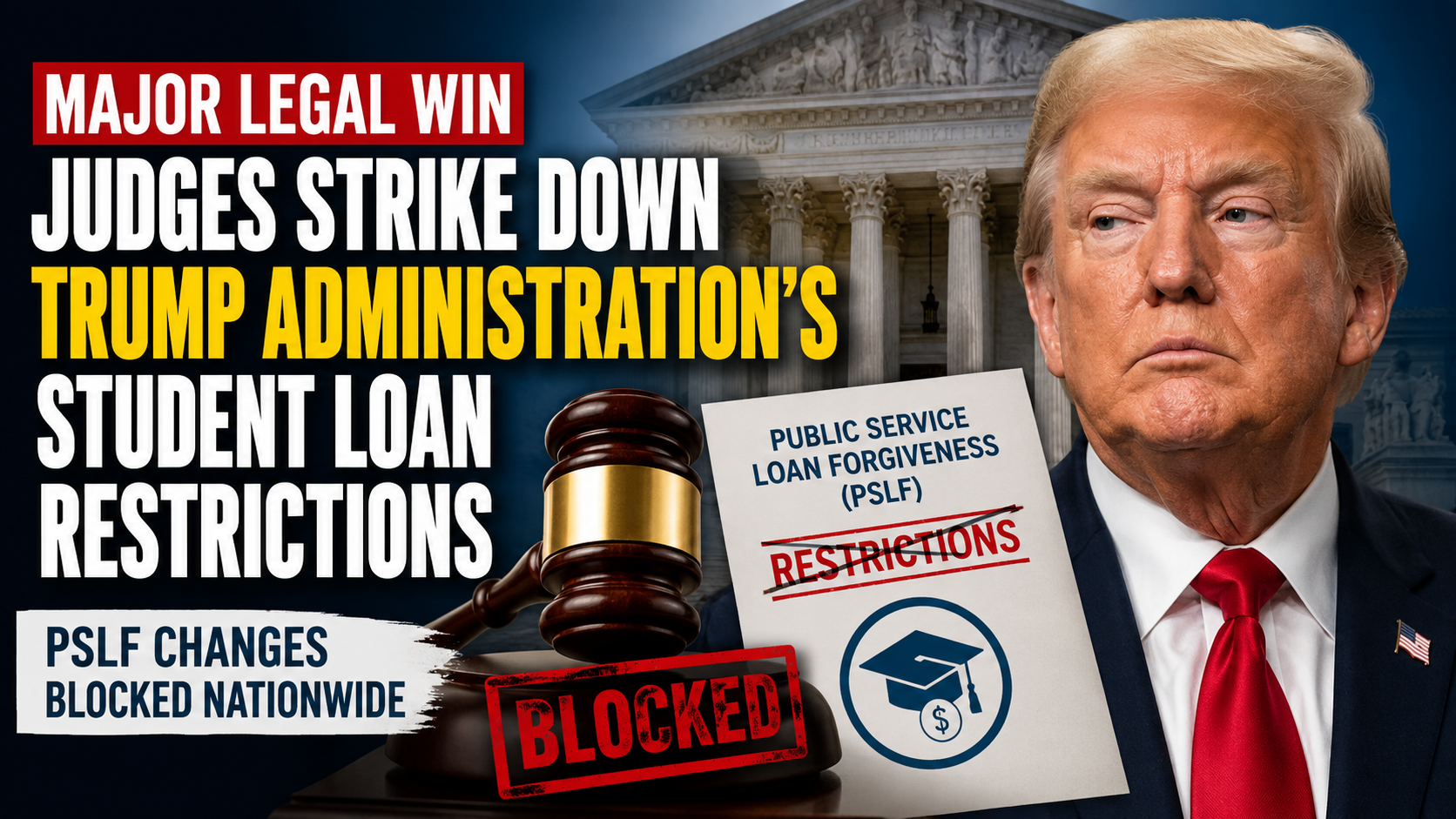
Two federal judges have blocked the Trump administration’s proposed changes to the Public Service Loan Forgiveness program, ruling that the Department of Education likely exceeded its legal authority. Trump student loan forgiveness
Two federal judges have temporarily stopped the Trump administration from enforcing new restrictions on the Public Service Loan Forgiveness (PSLF) program, preventing major eligibility changes that were scheduled to take effect this week.
The rulings, issued by federal courts in Massachusetts and Washington, D.C., represent another legal challenge to the administration’s efforts to reshape federal education policy and redefine who qualifies for student loan forgiveness.
The Department of Education sought to revise the PSLF program by allowing the government to deny loan forgiveness to public service workers employed by organizations determined to have a “substantial illegal purpose.”
According to the administration, the goal was to ensure taxpayer-funded loan forgiveness would not benefit organizations involved in activities it considers contrary to public interests. The proposed rule specifically referenced activities such as aiding illegal immigration, supporting terrorism or human trafficking, and facilitating certain forms of gender-affirming medical care for minors.
The rule was scheduled to take effect one day after the court rulings.
More than 20 states joined nonprofit organizations in filing lawsuits against the Department of Education, arguing that the new policy granted the federal government overly broad authority to determine which employers qualified under the PSLF program.

The plaintiffs contended that organizations involved in immigration advocacy, transgender healthcare, and other politically sensitive issues could unfairly lose eligibility, leaving employees without access to loan forgiveness despite meeting existing program requirements.
They also argued that the rule could discourage organizations from engaging in constitutionally protected advocacy out of fear of losing federal benefits for their employees.
In Massachusetts, U.S. District Judge Myong Joun ruled that the Department of Education likely exceeded the authority granted to it by Congress when creating the new restrictions.
In his opinion, Judge Joun stated that federal agencies cannot create new criminal prohibitions through administrative rulemaking and expressed concern that the policy had already discouraged protected speech among affected organizations.
Meanwhile, U.S. District Judge Amir Ali in Washington, D.C., also blocked the rule in a separate lawsuit filed by nonprofit advocacy groups, preventing the restrictions from taking effect while the legal challenges continue.
Despite the court decisions, the Department of Education says it is reviewing its legal options.
Under Secretary of Education Nicholas Kent defended the proposal, describing it as a “commonsense policy” intended to preserve the integrity of the loan forgiveness program.
According to the department, the Public Service Loan Forgiveness program should support individuals working for organizations that serve the public interest and should not extend benefits to entities involved in unlawful or harmful activities.
Congress established the Public Service Loan Forgiveness program in 2007 to encourage graduates to pursue careers in public service. Borrowers who work full-time for qualifying government agencies or nonprofit organizations and make 120 qualifying monthly payments can have their remaining federal student loan balances forgiven.
Since its creation, more than one million Americans have received loan forgiveness through the program.
The preliminary rulings do not permanently end the administration’s proposed changes but prevent them from taking effect while the lawsuits proceed through the courts.
The cases could ultimately determine how much authority the executive branch has to redefine eligibility for federal student loan forgiveness without new legislation from Congress.
As litigation continues, current PSLF eligibility requirements remain in effect, providing temporary certainty for borrowers working toward loan forgiveness.