 11
11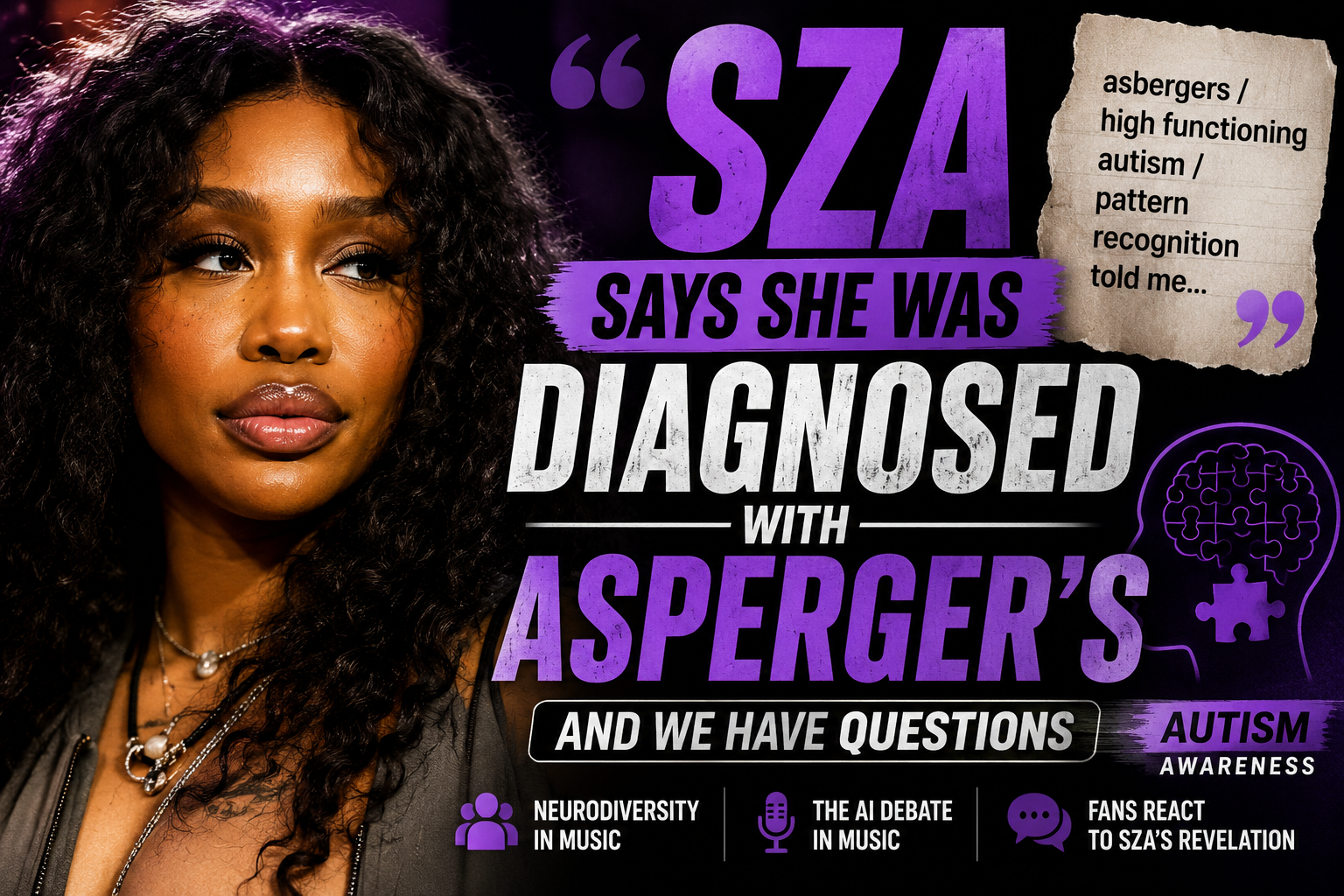
By Black Independent Press
Grammy-winning singer SZA has sparked widespread conversation after revealing that she was formally diagnosed with autism spectrum disorder, using the older term “Asperger’s” in a candid social media post.
The unexpected announcement quickly spread across social media, with fans expressing support while others questioned the terminology she used and what her diagnosis means.
Posting from her Instagram burner account, @notmusicatalliswear, SZA revealed that she recently sought a formal evaluation after years of speculation.
“Finally took the time n got formally diagnosed .. asbergers / high functioning autism / smarter than u n##### so stop playing in my face cause pattern recognition told me and I WILL get to the bottom if it thanks. pretty sure this is why I’m taking AI so personally btw lol. And also why I’m in every comment section.”
The post mixed SZA’s trademark humor with what appeared to be a sincere personal revelation, leaving many fans wondering how much of the message was playful and how much reflected her lived experience.
One aspect of SZA’s post that drew attention was her use of the term “Asperger’s.”
While many people still use the word conversationally, Asperger syndrome is no longer recognized as a separate medical diagnosis in the United States. Since 2013, it has been included under the broader diagnosis of Autism Spectrum Disorder (ASD) in the Diagnostic and Statistical Manual of Mental Disorders (DSM-5).

Some individuals who were diagnosed before the change continue to identify with the term, while others prefer “autistic” or “autism spectrum disorder.”
SZA also connected her diagnosis to her recent criticism of artificial intelligence.
She joked that understanding how her brain works may explain why she’s taken conversations about AI so personally and why she’s frequently engaged in online discussions.
Artificial intelligence has become one of the biggest topics in the music industry, with artists increasingly voicing concerns about AI-generated vocals, copyright, creativity, and the future of human artistry.
Whether SZA was joking or speaking seriously, or both, her comments have added another layer to the ongoing debate.
Social media responses have been mixed.
Many fans applauded SZA for speaking openly about receiving a diagnosis later in life, noting that many adults—especially women—are not diagnosed with autism until adulthood.
Others questioned the terminology she used or wondered whether her characteristic humor made it difficult to interpret the announcement.
Regardless, the discussion has expanded beyond SZA herself, bringing more attention to conversations surrounding neurodiversity in entertainment.
Mental health and neurodiversity have become increasingly visible topics within Hip-Hop and R&B. As more artists share their personal experiences, fans are gaining a broader understanding of how different neurological conditions can shape creativity, communication, and public life.
While SZA’s announcement has generated headlines, it also highlights a larger conversation about autism awareness, adult diagnoses, and the importance of allowing people to tell their own stories in their own words.
Should more artists openly discuss autism and other forms of neurodiversity, or should those conversations remain private?
Share your thoughts respectfully in the comments below.