 11
11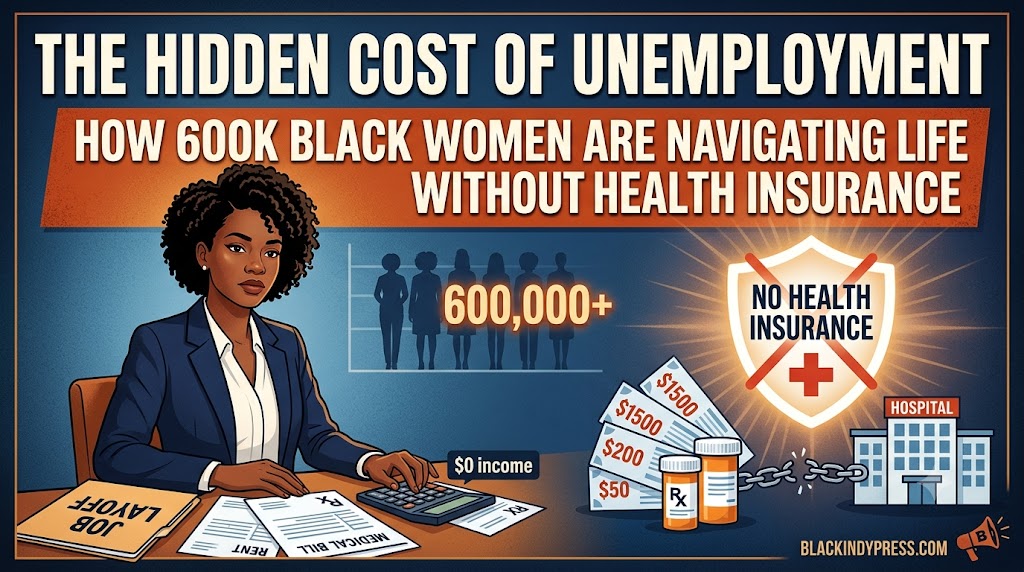
Job loss is never just about losing a paycheck. In a country where healthcare access is deeply tied to full-time employment, losing a job often means losing a vital safety net.
A recent report highlights a staggering and troubling trend: 600,000 Black women have been pushed out of the workforce due to a devastating combination of mass layoffs, targeted terminations, and systemic discrimination. Without universal basic healthcare, this massive shift has left hundreds of thousands of women dangerously exposed—forcing them to choose between keeping a roof over their heads or managing their medical needs.
The ripple effect of losing coverage is immediate and far-reaching. Research shows that individuals without insurance are significantly less likely to have a regular source of care, rarely receive preventive services, and miss out on the early detection of major medical problems.
For the college-educated Black women demographic—who have been hit particularly hard by this economic climate—the sudden reality of being uninsured changes everything. Everyday life becomes an exercise in hyper-vigilance. Women report working out more, taking extra vitamins, and even hyper-focusing on everyday safety like strictly waiting for traffic lights just to avoid a financially ruinous medical emergency.
The systemic flaws become glaringly obvious when looking at the real-life experiences of women navigating this crisis:
Many women quickly realize that emergency savings are designed to cover immediate needs like rent, not astronomical marketplace insurance rates. As Candice Fredrick, who lost her coverage in June 2025, puts it: “You either go to the doctor, or you keep a roof over your head. Sadly, this is what life looks like when you’re unemployed.”
Medical experts agree that individual marketplace plans are far too expensive for newly unemployed workers. Dr. Adam Aponte, MD, MSc, FAAP, CEO at the East Harlem Council for Human Services, noted that it is highly unlikely individuals facing layoffs can afford marketplace plans, leaving them entirely caught without insurance.

While some women, like Oyefeso, have found relief by leveraging public healthcare facilities like Planned Parenthood to qualify for state care, millions of others remain in limbo.
This crisis is worsened by the persistent racial and gender wage gap. Because Black women earn less on average, they have less financial runway to build up robust emergency funds. You cannot save what you are not earning in the first place.
The current system creates a cruel paradox: if someone goes through a severe physical or mental health crisis that makes it impossible to maintain a full-time job, they lose the exact insurance they need to treat that crisis.
As the economic landscape continues to shift, the stories of these 600,000 women serve as a critical reminder that tying the human right of healthcare strictly to employment leaves the most vulnerable communities exposed to disaster.