
 11
11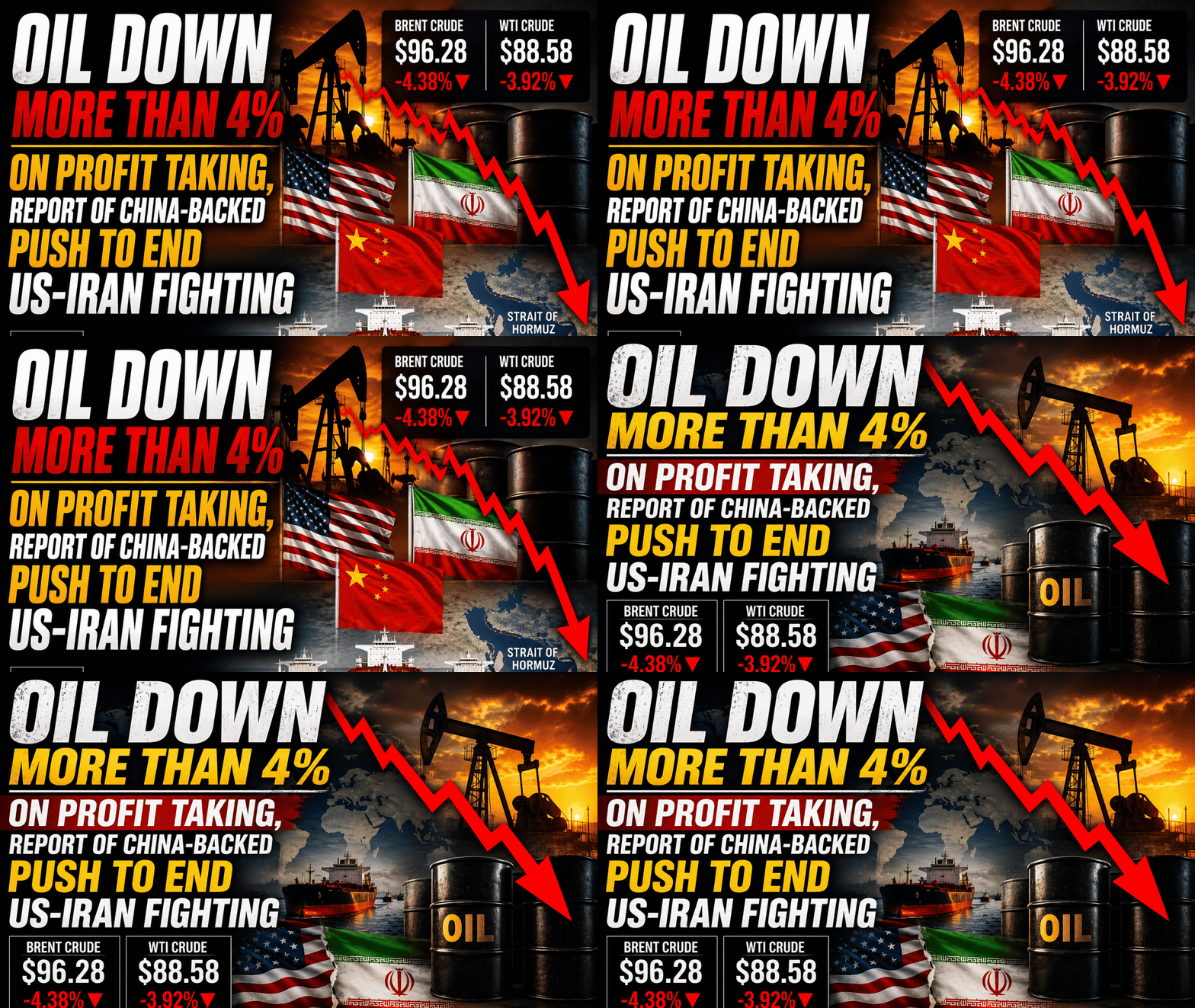
By Black Independent Press
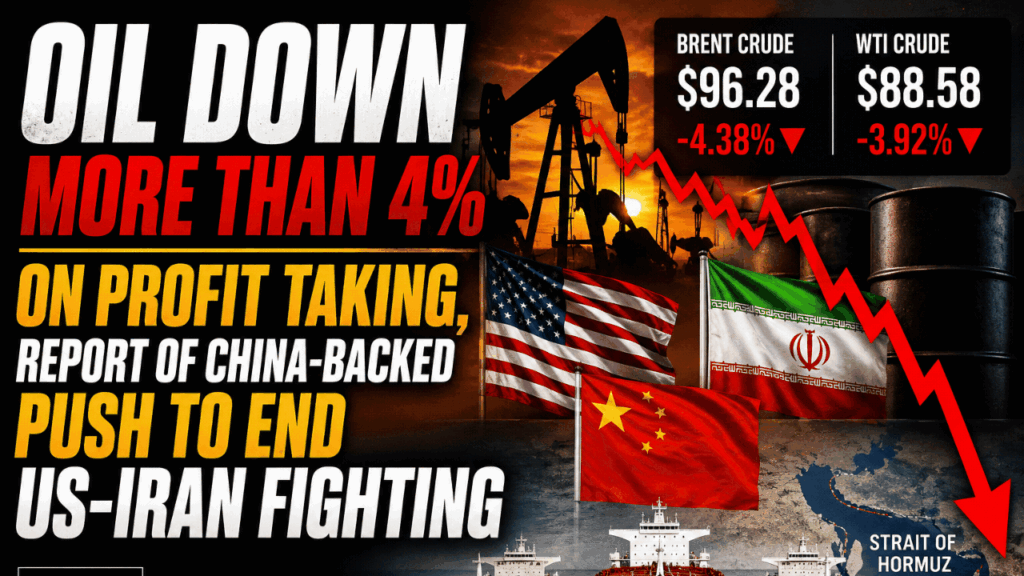
Global oil prices fell sharply on Friday after a week of intense gains, as traders locked in profits and reports surfaced that China is attempting to restart peace talks between the United States and Iran.
Despite the day’s decline, crude oil remains on track for one of its strongest weekly performances in months, underscoring the ongoing uncertainty surrounding global energy markets.
Brent crude futures dropped 4.38%, falling $4.41 to $96.28 per barrel after closing above the $100 mark for the first time since May.
Meanwhile, U.S. West Texas Intermediate (WTI) crude fell 3.92%, declining $3.61 to $88.58 per barrel.
The selloff followed several days of strong gains driven by escalating military tensions between the United States and Iran.
Earlier this week, oil prices surged after the United States and Iran exchanged missile strikes, raising fears of prolonged conflict throughout the Middle East.

Additional concerns include:
Together, these developments fueled concerns about potential disruptions to the global oil supply.
One of the biggest developments influencing Friday’s market was a report that China has begun encouraging renewed diplomatic talks between Washington and Tehran.
While no official agreement has been announced, investors viewed the reports as a sign that tensions could eventually ease, prompting many traders to secure profits after oil’s rapid rise.
Markets often react quickly to any indication that geopolitical risks may decrease, especially when global energy supplies are involved.
Analysts caution that volatility is far from over.
Phil Flynn, senior analyst at Price Futures Group, noted that global oil inventories remain relatively tight.
According to Flynn, the current market could shift dramatically depending on how events unfold in the Middle East.
Meanwhile, UBS analyst Giovanni Staunovo pointed out that while shipping disruptions have increased, global energy transportation has not completely stopped.
“Ships are still moving… it’s not a complete blockade as some might have feared.”
President Donald Trump vowed “major military punishment” against Iran and its Houthi allies following attacks on two Saudi oil tankers in the Red Sea.
Iran has reportedly encouraged Houthi forces to target strategic shipping routes if U.S. military operations continue against Iranian infrastructure.
The Bab el-Mandeb Strait, located between Yemen and the Horn of Africa, remains one of the world’s most critical energy transit corridors after the Strait of Hormuz.
Financial analysts at JPMorgan estimate that every additional month of significant oil supply disruption could add approximately $7 to $8 per barrel to Brent crude prices.
If disruptions continue for three months, Brent crude could average approximately $114 per barrel, according to the bank’s projections.
The oil market is also monitoring developments outside the Middle East.
Russia announced overnight strikes targeting infrastructure at three Ukrainian ports, including fuel reserves and cargo facilities.
Separately, Kazakhstan temporarily reduced oil production after suspected Ukrainian drone attacks forced the closure of one of its primary Black Sea export terminals.
These events add another layer of uncertainty to an already volatile global energy landscape.
Although oil prices declined on Friday, continued geopolitical instability means gasoline and diesel prices could remain volatile in the coming weeks.
Consumers may experience fluctuations at the pump depending on whether diplomatic efforts succeed or military conflicts escalate further.
For now, investors, governments, and energy companies will be closely watching developments in the Middle East and Eastern Europe as global supply concerns continue to shape the market.
Source: Reuters
Follow Black Independent Press for breaking news on business, global markets, politics, and the economy.