 11
11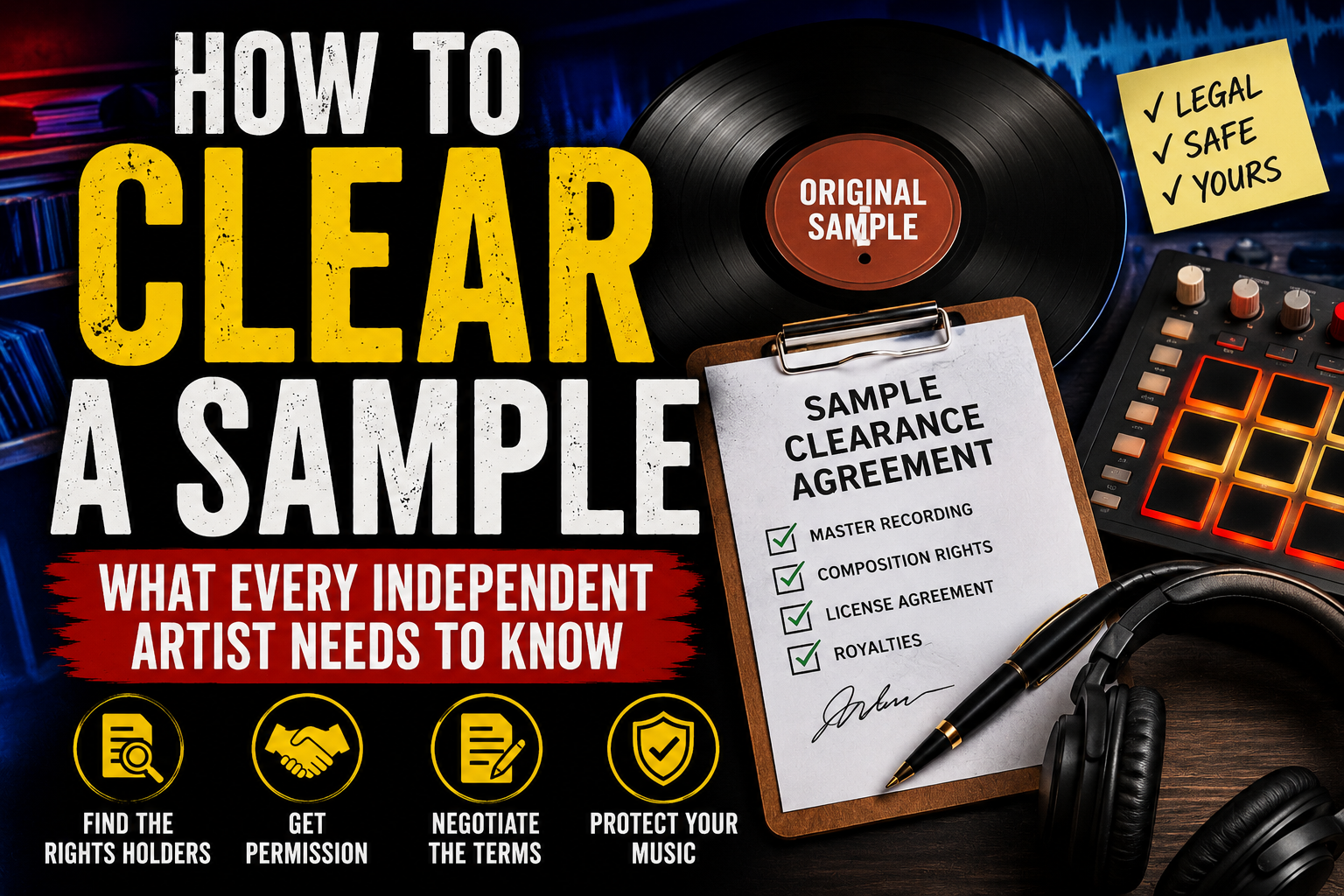
Sampling has played a major role in shaping hip-hop, R&B, pop, and electronic music for decades. From classic soul loops to viral TikTok remixes, sampling allows artists to build on the sounds that inspired them. However, before releasing a song that contains someone else’s music, it’s important to understand the legal process of sample clearance. Clear A Sample
Failing to clear a sample can lead to lawsuits, lost royalties, takedowns from streaming platforms, and delays in your release.
Here’s what every independent artist should know.
Sample clearance is the process of obtaining legal permission to use a portion of an existing recording in your own music.
Using even a few seconds of another song without permission can potentially infringe on copyright laws. That’s why artists, producers, and labels typically secure permission before releasing music containing a recognizable sample.
Many artists don’t realize there are two separate copyrights involved when sampling a song.
This is the actual recorded performance.

The master recording is usually owned by:
If you’re using the original recording, you’ll need permission from the master owner.
This covers the underlying song itself, including:
The composition is usually owned by the songwriter(s) and their music publisher.
To legally sample a song, you generally need permission from both the master owner and the publisher(s).
Clearing a sample typically involves several steps:
Research who owns:
Organizations like ASCAP, BMI, SESAC, and music publishers can help identify copyright owners.
Reach out with details including:
Rights holders may ask for:
Every agreement is different.
Never rely on verbal permission.
A written license agreement protects everyone involved and ensures you have the legal right to release your music.
Releasing music with an uncleared sample can lead to serious consequences.
Possible issues include:
Many artists have learned this lesson the hard way, with courts awarding significant damages in high-profile sampling disputes.
If clearing a sample isn’t practical or affordable, consider these options:
Instead of using the original recording, you can re-record the melody or musical part yourself.
While you may still need permission for the composition, you won’t need to license the original master recording.
Many companies offer professionally recorded loops and sounds that come with licenses for commercial use.
Popular options include:
Always read the license terms before using any sample pack.
Recreating a musical idea with live musicians can provide a unique sound while avoiding some of the complications of using an existing master recording.
AI-powered tools can assist with identifying songs, organizing rights information, and streamlining parts of the licensing process. However, AI cannot grant legal permission or replace formal licensing agreements.
When in doubt, consult an experienced entertainment attorney or music licensing professional.
For independent artists, it’s tempting to release music quickly. But taking the time to clear samples can save you from costly legal problems later.
If your goal is to build a long-term career, treating copyright seriously is just as important as creating great music.
Understanding the sample clearance process not only protects your work—it also respects the creators whose music helped inspire yours.