 11
11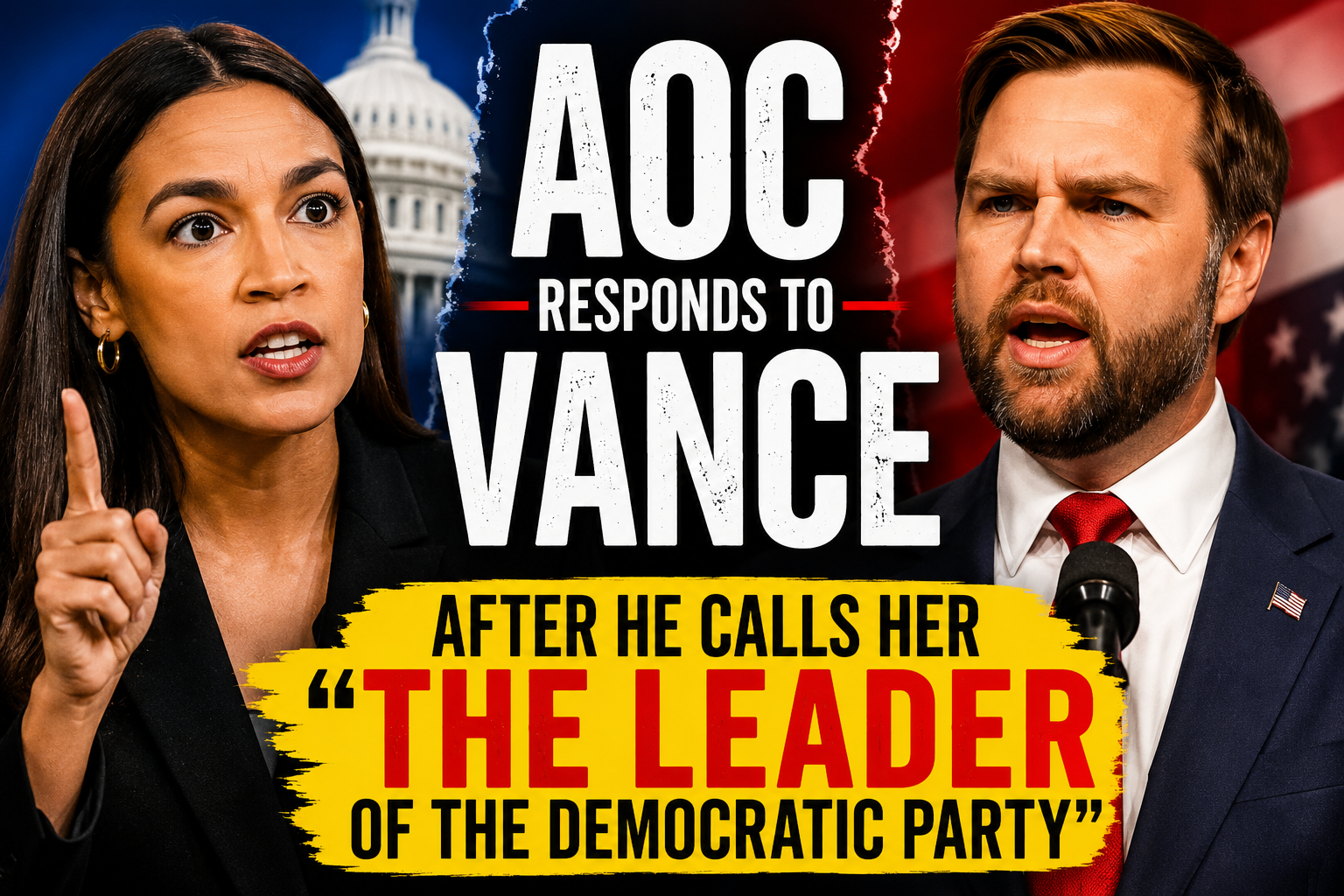
Representative Alexandria Ocasio-Cortez (D-N.Y.) is pushing back after Vice President JD Vance referred to her as “the leader of the Democratic Party,” a remark that quickly sparked political debate across social media and cable news.
The exchange highlights the growing divide between Republicans and Democrats as both parties continue shaping their messaging ahead of upcoming elections.
During recent public remarks, Vice President JD Vance characterized Ocasio-Cortez as the face of today’s Democratic Party, suggesting her progressive positions represent the direction of the party’s leadership.
While Republicans have frequently pointed to AOC as a symbol of the Democratic Party’s left wing, Democrats have generally rejected the idea that she formally leads the party, noting that congressional leadership remains in the hands of elected House and Senate leaders.
The comment immediately gained traction online, with supporters and critics debating whether Vance’s characterization was political strategy or a genuine assessment of the party’s influence.
Ocasio-Cortez didn’t let the remark go unanswered.
Responding publicly, she dismissed Vance’s statement while criticizing what she described as Republican efforts to shift attention away from issues affecting everyday Americans.

Rather than embracing the label, AOC argued that the focus should remain on policies impacting working families, healthcare, wages, and economic opportunity instead of political name-calling.
Her response quickly circulated across social media, generating thousands of reactions from supporters and opponents alike.
Although she holds no formal party leadership position, Alexandria Ocasio-Cortez has become one of the most recognizable Democratic lawmakers in the country.
Since first being elected to Congress in 2018, she has built a massive social media following and has become a leading voice on issues including:
Republicans often spotlight her progressive agenda to argue that Democrats are moving further to the left, while many Democrats view her as an influential voice—but not the party’s official leader.
Comments like Vance’s are part of a broader strategy both parties use to energize their supporters.
Republicans frequently tie Democratic candidates to progressive figures like Ocasio-Cortez, while Democrats often criticize Republican leaders over economic policies, healthcare, and social issues.
As election campaigns continue, voters can expect more sharp exchanges as candidates compete to define their opponents before they define themselves.
The online response was immediate.
Supporters of Ocasio-Cortez praised her response, arguing that Republicans frequently elevate her profile because of her popularity and ability to dominate headlines.
Meanwhile, critics echoed Vance’s remarks, claiming her influence extends well beyond her congressional district and shapes national Democratic priorities.
The discussion quickly became another viral political flashpoint across X, Facebook, Instagram, and other platforms.
Whether or not Alexandria Ocasio-Cortez is the “leader” of the Democratic Party is ultimately a matter of political rhetoric rather than official fact. While she remains one of the party’s most influential and recognizable figures, Democratic leadership is formally held by elected congressional leaders and party officials.
Still, the exchange between AOC and Vice President JD Vance underscores how influential personalities continue to dominate the nation’s political conversation as both parties prepare for future electoral battles.