 11
11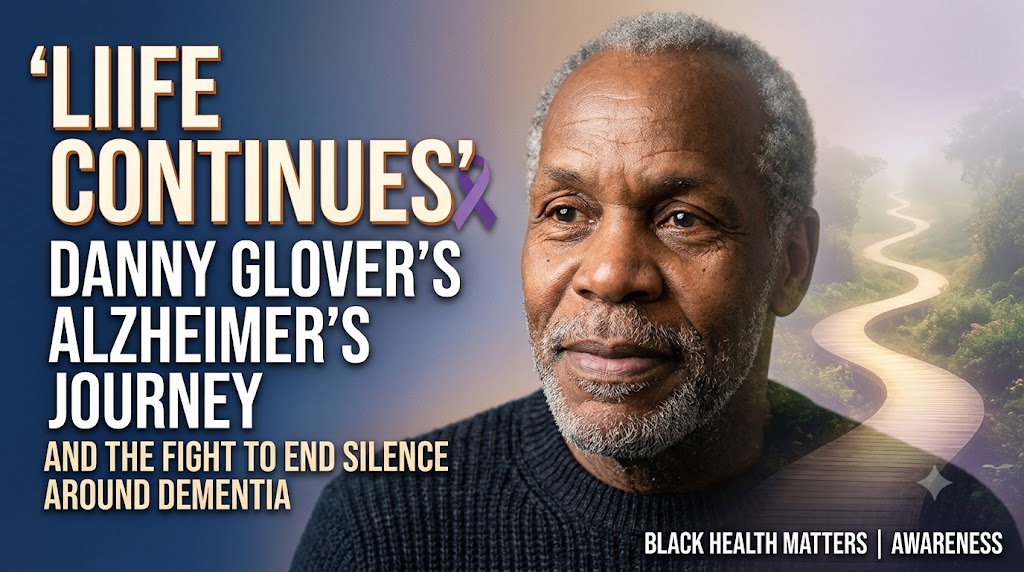
The news that Hollywood legend and humanitarian Danny Glover has been living with Alzheimer’s disease has resonated deeply with millions of families across the country. By revealing his diagnosis publicly on the Today Show, the 79-year-old Lethal Weapon and The Color Purple star chose to take control of his own narrative, shining a much-needed spotlight on a disease that is too often met with silence and stigma—especially within Black communities.
Glover is far from alone. He is one of the more than 7 million Americans navigating this progressive neurodegenerative condition.
Alzheimer’s disease is the most common form of dementia, accounting for over 60% of all cases. Characterized by memory loss, challenges with problem-solving, and difficulties with daily tasks, its progression looks different for everyone.
For Glover, who received his diagnosis roughly three years ago, the condition has begun to impact his speech and physical movement. Yet, his outlook remains intentionally grounded in hope and ongoing purpose.
“I don’t feel like it’s the end of my life. There’s work to do. I still have my daughter, I have friends. I want to just say, your life continues.” — Danny Glover
His transparency highlights a vital truth: an Alzheimer’s diagnosis is not an immediate sentence of total loss. With early detection, proactive lifestyle strategies, and robust community support, individuals can continue to lead active, meaningful lives.
While Alzheimer’s impacts Americans across all demographics, the statistics highlight a stark public health disparity: Older Black Americans are roughly twice as likely to develop Alzheimer’s or other forms of dementia than older white Americans.
Despite this higher prevalence, significant systemic barriers complicate how Black families experience the disease:

One of the most moving aspects of Glover’s public announcement was the presence of his support system. Flanked by his daughter, Mandisa, and his brother, Martin, the actor emphasized that navigating cognitive decline requires a collective effort. “They’ve got my back,” he shared.
Mandisa noted that stepping forward was about giving her father ownership over his journey, while also validating the millions of unpaid family caregivers who form the backbone of dementia care. Unpaid caregivers—often family members—provide billions of hours of care annually, managing the heavy emotional and physical architecture of keeping their loved ones safe, valued, and included.
For many families, the initial reaction to a dementia diagnosis is to retreat into isolation out of fear of being treated differently. However, neurologists emphasize that hiding the condition actually increases stress hormones like cortisol, which can accelerate inflammation and worsen symptoms.
By speaking out, Danny Glover is leveraging his lifelong legacy of humanitarianism to dismantle that very stigma. His vulnerability offers a mirror and a sense of community to millions of families who have been carrying this diagnosis in quiet isolation. Through his openness, he reminds us that while the journey with Alzheimer’s involves profound changes, the value, dignity, and life of the person enduring it endure fully.
For a deeper dive into the medical realities of this condition, genetic testing, and what this diagnosis means for families moving forward, watch Understanding Alzheimer’s with Dr. Angela Goins. This discussion provides valuable context on how lifestyle factors and newer treatments impact the progression of the disease.