 11
11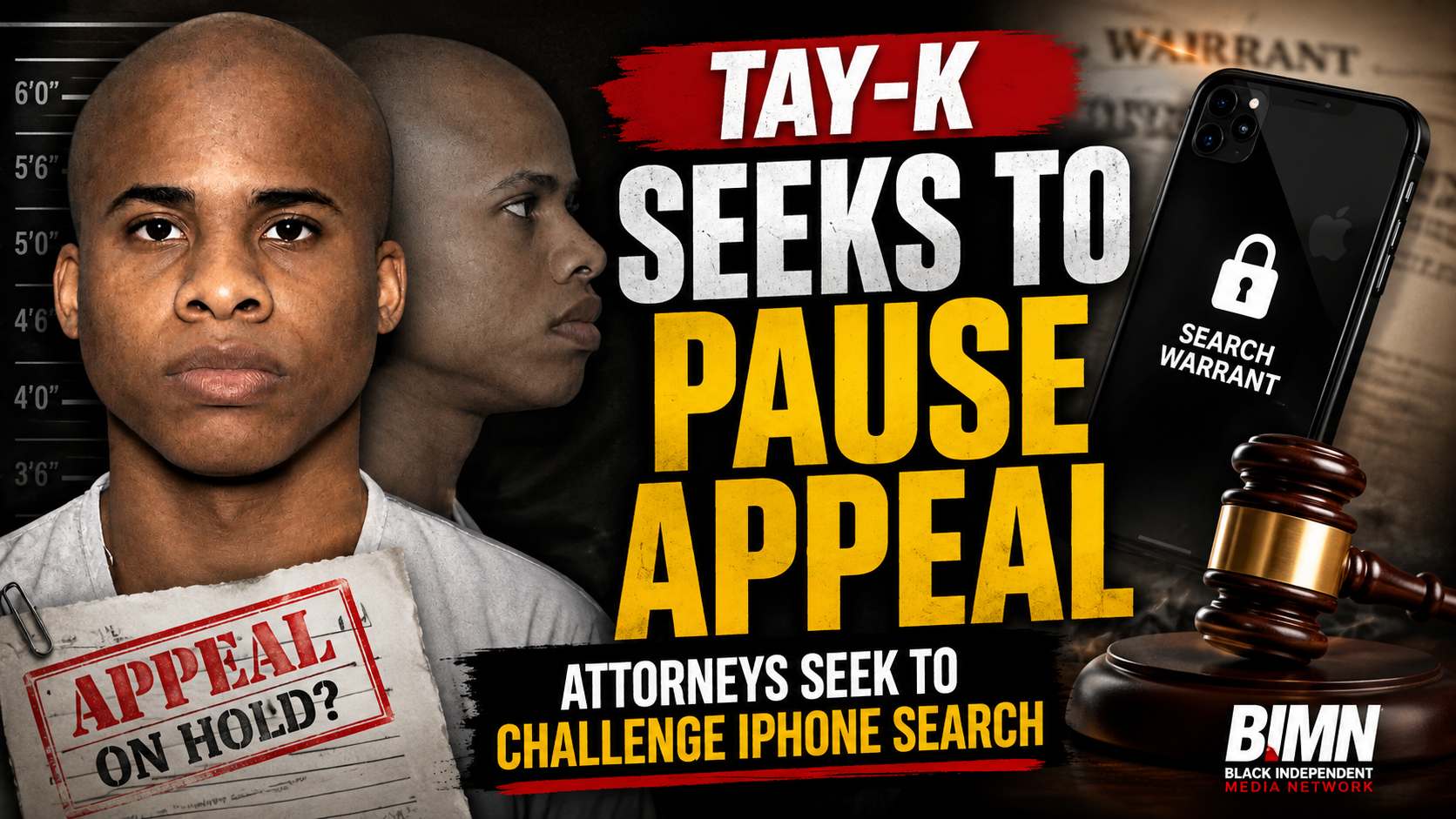
By Black Independent Media Network
Rapper Tay-K is once again making headlines as his legal team pursues a new strategy that could impact the outcome of his ongoing criminal case. According to recent reports, the Texas rapper is asking the court to temporarily pause his appeal while his attorneys challenge the legality of evidence obtained from his iPhone.
The move centers on whether law enforcement’s search of the device complied with constitutional protections and established legal standards for digital privacy.
Tay-K’s attorneys argue that information recovered from his iPhone may have played a significant role in the prosecution’s case. By challenging how investigators accessed the device, the defense hopes to determine whether key evidence should have been excluded.
If the court agrees that the search violated legal requirements, it could affect parts of the evidence considered during the case. However, legal experts note that a successful challenge would not automatically overturn a conviction. Instead, the court would have to determine whether the evidence materially influenced the outcome.
Rather than continuing with the current appeal process, Tay-K’s legal team has requested that the appeal be paused until the constitutional issues surrounding the phone search are fully addressed.
This approach allows the defense to focus on what it believes is a critical legal question before moving forward with broader appellate arguments.

Prosecutors are expected to oppose the request, leaving the final decision in the hands of the court.
The case also highlights a growing legal issue facing courts across the country: how law enforcement agencies access smartphones during criminal investigations.
Modern smartphones often contain years of personal communications, photos, location history, internet activity, and financial information. Because of this, courts continue to examine how the Fourth Amendment applies to digital devices and what procedures investigators must follow before searching them.
Legal rulings in cases like Tay-K’s could influence how future digital evidence is handled nationwide.
The court will decide whether to grant Tay-K’s request to pause the appeal while the challenge to the iPhone search proceeds.
If approved, the appeal process could be delayed as judges consider the constitutional questions raised by the defense. If denied, the appeal would likely continue under its current timeline.
For now, the latest filing adds another chapter to one of hip-hop’s most closely watched legal cases.
What do you think? Should courts take a closer look at how police search smartphones, or should digital evidence obtained during criminal investigations generally remain admissible? Let us know your thoughts in the comments.