 11
11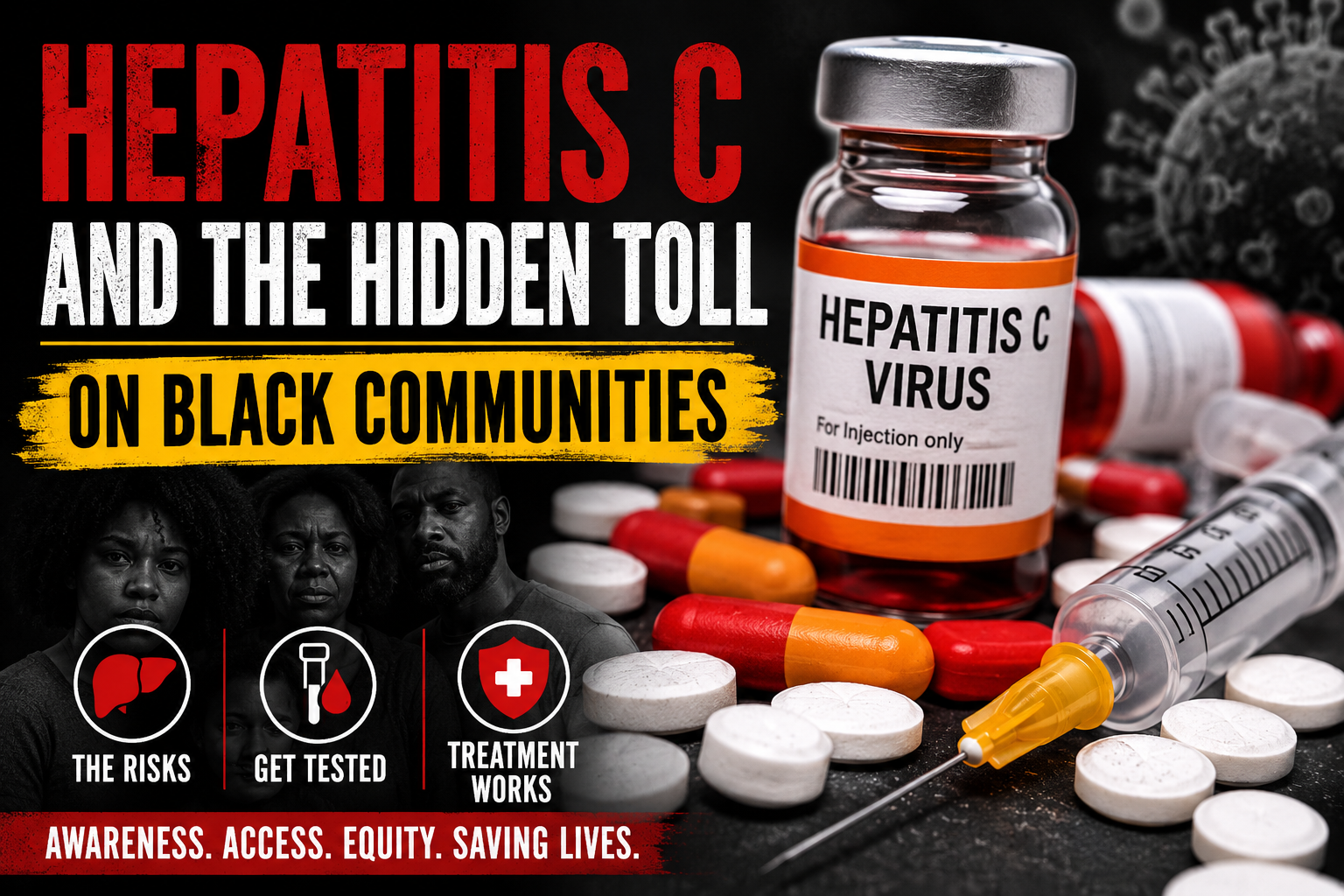
By Black Independent Media Network
Hepatitis C is often called a “silent disease” because many people can live with the virus for years without experiencing noticeable symptoms. Unfortunately, that silence has come at a devastating cost for many Black Americans, who continue to face significant disparities in diagnosis, treatment, and health outcomes.
While modern medicine has made Hepatitis C one of the few chronic viral infections that can actually be cured, too many people remain unaware they’re infected until serious liver damage has already occurred.
Hepatitis C is a viral infection that attacks the liver. It is spread primarily through contact with infected blood and, if left untreated, can lead to:
The virus often causes no symptoms during its early stages, making regular screening especially important.
Several factors contribute to the unequal burden Hepatitis C places on Black communities, including:
Research has shown that Black Americans are often diagnosed later in the disease process and may experience worse liver-related complications compared to other populations.

One of the biggest advances in modern medicine is the development of direct-acting antiviral medications that can cure more than 95% of Hepatitis C infections when taken as prescribed.
Treatment today is far simpler than it was years ago. Most patients complete treatment in just 8 to 12 weeks, with minimal side effects compared to older therapies.
Early diagnosis can literally save lives.
Health experts recommend Hepatitis C screening for:
If you’re unsure whether you should be tested, talk with your healthcare provider.
Many people avoid getting tested because of fear or stigma surrounding Hepatitis C. The truth is that anyone can become infected, and seeking testing is a responsible step toward protecting yourself and those you love.
Education and open conversations are essential to reducing misinformation and encouraging early treatment.
Closing the gap in Hepatitis C outcomes will require:
When communities have the resources and information they need, preventable diseases become far less deadly.
Hepatitis C is no longer a life sentence. With modern treatments capable of curing the disease, the biggest challenge is ensuring that everyone has equal access to testing and care.
For Black communities, increasing awareness about Hepatitis C isn’t just a health issue—it’s an equity issue. Early detection, timely treatment, and community education can help save lives and reduce the disproportionate impact this disease continues to have.
Health Tip: If you’ve never been screened for Hepatitis C, ask your healthcare provider whether testing is appropriate for you. Early detection can make all the difference.
Source: Black Health Matters